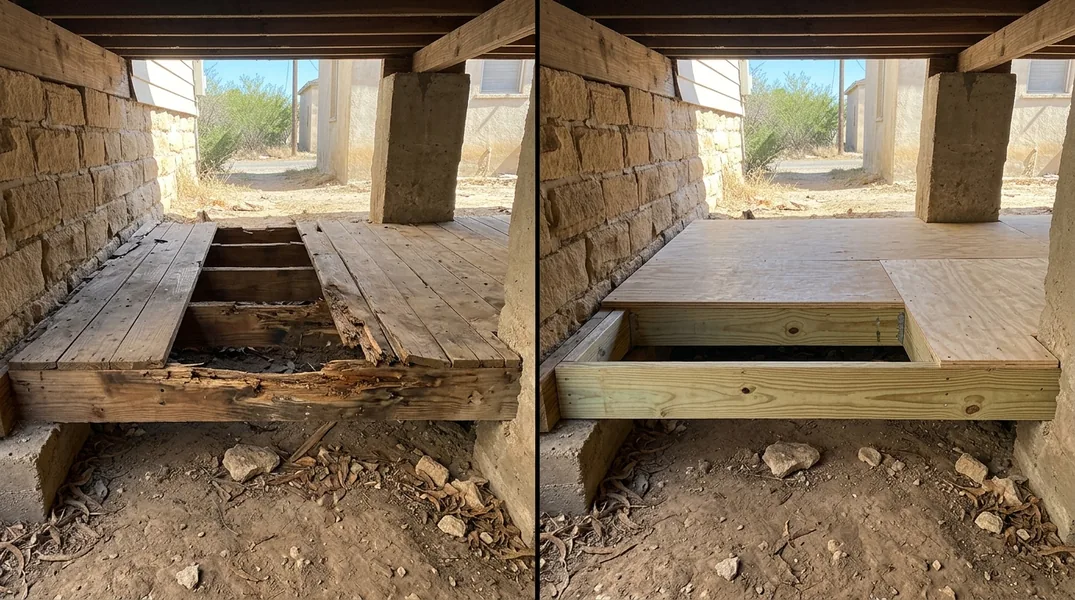
Why Old Laredo Homes Develop Sagging Floors
If you own an older home in Laredo, you've probably noticed a slight dip in the floor as you walk from one room to another. That subtle sag isn't just an aesthetic quirk of vintage architecture. It's a structural red flag that demands attention.
The primary culprit behind sagging floors in Laredo homes is the region's expansive clay soil. This soil type shifts and settles unevenly over decades, especially during dry seasons when it contracts and during wet seasons when it expands. Pier and beam foundations, common in older South Texas homes, sit directly on this unstable soil. As the ground beneath the piers shifts, the entire foundation moves with it, causing the floor system to lose its level plane. Unlike modern slab foundations, pier and beam systems allow for visible and progressive settlement.
Beyond soil movement, two other major factors contribute to floor sagging: termite damage and wood rot. Termites are relentless in the Texas climate, and they target the wooden support structures beneath your home. When they consume the interior of floor joists and beams, the structural integrity collapses quietly. Similarly, moisture intrusion from poor drainage or plumbing leaks leads to dry rot, which weakens wood fiber by fiber. Both pests and decay reduce the load-bearing capacity of your floor system, causing noticeable sag over time.
Understanding Pier and Beam Floor Systems in South Texas
Pier and beam construction was the standard for residential building in South Texas for much of the 20th century. This design elevates the home several feet above grade, supported by concrete piers (posts) that rest on footings driven into the soil. Between the piers runs a network of wooden beams and floor joists that create the floor platform. This system has real advantages: it allows for easier access to plumbing and electrical lines, provides natural ventilation underneath the home, and accommodates the natural movement of expansive clay soil better than a rigid slab.
However, pier and beam systems are only as strong as their weakest component. When any single element fails, the entire structure suffers. A cracked pier, a rotted beam, or termite-damaged joists forces the remaining structure to carry more load than it was designed for. This overload manifests as sagging or bouncing floors. The problem compounds over time because the uneven load distribution accelerates deterioration in other areas. If you notice your floors bouncing when you walk, or if you see visible gaps opening up between walls and ceilings, your pier and beam system needs professional evaluation. Contact Laredo Carpentry for a free estimate to assess your foundation and floor condition.
Termite Damage and Wood Rot: The Silent Destroyers
Termite Damage Repair is one of the most common services we provide to homeowners in the area, and for good reason. Subterranean termites thrive in the warm, humid climate of South Texas. They enter homes through mud tubes that connect the soil to wood structures, and they work silently inside the wood for years before visible damage appears. By the time you notice a sagging floor, termites may have already compromised 30 to 50 percent of a beam's structural capacity.
Dry rot, caused by wood-decay fungi, is equally destructive. Unlike termites, dry rot doesn't require the wood to be in contact with soil. It spreads through wood that has been exposed to moisture and poor ventilation, common conditions in crawl spaces beneath older homes. The fungus breaks down the cellulose in wood, turning it soft and crumbly. A beam that looks solid on the surface may be hollow inside. When you combine termite activity with dry rot in the same floor system, the structural failure happens faster and more severely. Wood Rot & Dry Rot Repair requires immediate action to prevent catastrophic floor failure.
Floor Joist and Beam Repair: Sistering and Replacement Options
Floor Joist & Subfloor Repair comes in several forms, depending on the extent of damage and the structural requirements of your home. The most common repair method is sistering, which involves fastening a new, pressure-treated joist or beam alongside the damaged one. This new member shares the load with the compromised original, effectively doubling the load-bearing capacity of that section. Sistering works well for localized damage and is less invasive than full replacement, making it a cost-effective solution for many homeowners.
However, if the damage is extensive, or if multiple joists are compromised, full replacement may be necessary. This involves carefully supporting the floor above with temporary posts and beams, removing the damaged joist, and installing a new one to the same specifications. The new joist must be sized and graded correctly to handle the loads it will carry. This is where professional expertise matters enormously. An undersized replacement joist will fail again, and an oversized joist wastes money and may create other structural issues. At Laredo Carpentry, we calculate loads precisely and use materials rated for South Texas conditions, including pressure-treated lumber that resists termites and decay better than standard framing.
The choice between sistering and replacement also depends on the cause of the damage. If termites are still active, sistering a new joist next to an infested one is counterproductive. The termites will simply move to the new wood. In these cases, Termite Damage Repair must be coordinated with joist repair, and sometimes full replacement is the only lasting solution.
Pier and Beam Floor Repair in Laredo: What the Process Looks Like
When you call Laredo Carpentry to address sagging floors, the first step is a thorough inspection of your entire pier and beam system. We examine the piers for cracks or settling, inspect all beams and joists for rot and termite damage, check for proper ventilation in the crawl space, and assess the condition of any existing bracing or blocking. We also look for signs of moisture intrusion, such as standing water, mold, or rust on metal components. This inspection tells us the full story of what's happening beneath your home.
Once we've identified the problems, we develop a repair plan tailored to your home's specific needs. For minor settling and sag, we may use hydraulic jacks to carefully lift the floor back to level, then install or repair piers and footings to hold that level permanently. For damaged beams and joists, we determine whether sistering or replacement is appropriate. If the crawl space has moisture or ventilation problems, we may recommend improvements to the vapor barrier, drainage, or ventilation system to prevent future decay. Beam Replacement & Load-Bearing Wall Removal services are available if your home requires structural reinforcement beyond simple joist repair.
Throughout the repair process, we keep your home safe and accessible. We use temporary support systems to hold floors in place while we work, and we restore everything to its original condition when the repair is complete. The entire project is documented so you have a record of what was done and why, which is valuable for future resale or insurance purposes.
Sagging Floor Repair Cost in Laredo: What to Budget
The cost of repairing sagging floors varies widely depending on the cause, the extent of damage, and the repair method required. A simple sistering job on a single joist might cost between $800 and $2,500, while full beam replacement can range from $3,000 to $10,000 or more. If your home requires multiple repairs, foundation work, or pest treatment in addition to joist repair, the total project cost will be higher. The best way to understand your specific situation is to request a free estimate from Laredo Carpentry. We'll inspect your home thoroughly and provide a detailed quote that breaks down labor, materials, and any additional work we recommend.
It's tempting to delay floor repairs to save money in the short term, but this strategy backfires. A minor sag that costs $2,000 to repair today can become a catastrophic structural failure that costs $15,000 or more tomorrow. Additionally, sagging floors can damage other parts of your home, including walls, windows, doors, and the roof structure, multiplying repair costs. Insurance typically does not cover structural damage caused by neglect or pest infestation, so early intervention is your best financial protection. If you're concerned about pricing and want to explore your options, call us at (956) 552-9710 to discuss your situation with one of our experienced carpenters.
When to Call a Professional Near Me: Signs Your Floor Needs Immediate Attention
Not every slightly uneven floor requires emergency repair, but certain warning signs demand prompt professional attention. If you notice new or worsening sag, especially if it develops over months rather than years, something is actively failing. If your floors bounce or feel springy when you walk, if doors and windows are sticking or won't close properly, if you see visible cracks in drywall or plaster, or if you detect a musty smell in your crawl space, these are all red flags. Additionally, if you've had termite activity in your home before, or if you live in an older neighborhood where termite problems are common, have your floor system inspected every few years as a preventive measure.
The longer you wait to address floor problems, the more expensive the repair becomes and the greater the risk of injury. Sagging floors can eventually fail completely, creating a safety hazard for your family. If you're in Laredo and you've noticed any of these signs, don't hesitate to reach out. Laredo Carpentry has been serving the community for years, and we understand the unique structural challenges that South Texas homes face. Call us at (956) 552-9710 or visit our website to schedule your inspection today. Early detection and professional repair will protect your home's value and your family's safety for decades to come.
Looking for a professional carpentry contractor in Laredo? Laredo Carpentry responds fast for all your carpentry needs.
Get a Free QuoteOur services: Wood Rot & Dry Rot Repair · Termite Damage Repair · Floor Joist & Subfloor Repair