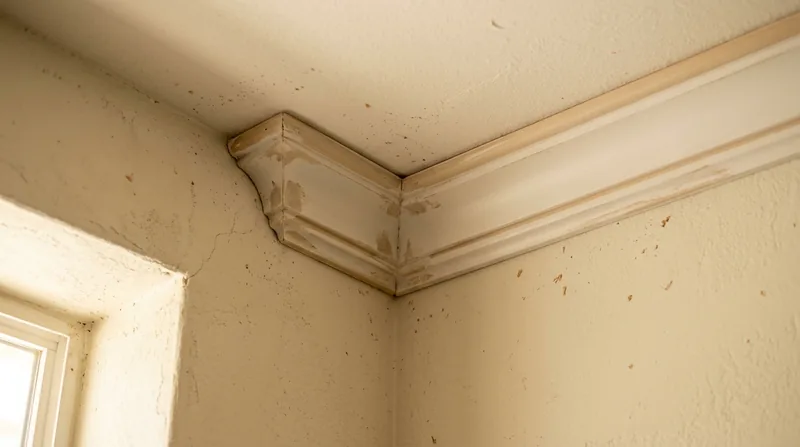




Crown molding and baseboard installation in Laredo transforms a room from bare drywall into finished space, but the work demands precision that separates a craft installation from a rough one. Laredo's residential stock spans a century of building styles: the sandstone-and-brick row houses of the historic blocks near the Rio Grande, the wood-trimmed Craftsman bungalows and Spanish Revival cottages of The Heights on pier-and-beam foundations, the brick ranches of Del Mar and Alexander with their period trim work, and the newer brick-and-stucco subdivisions spreading north toward Mines Road. Each era has its own crown profile, baseboard proportion, and joint detail that either honors the home's character or breaks it. Our work matches existing molding or installs new profiles with the coped joints and clean caulk lines these homes demand, accounting for Laredo's brutal sun, wide temperature swings, and the foundation movement that comes with South Texas clay soil.
Why Crown Molding and Baseboard Installation Matters in Laredo Homes
Crown molding and baseboards do more than look finished. They conceal gaps where walls meet ceiling and floor, gaps that open and close as Laredo's clay soil shifts and as temperature swings rack framing. They protect walls from furniture, vacuum cleaner damage, and the wear that accumulates over years. In historic Heights bungalows and Del Mar Craftsman homes, the right molding profile is part of the home's original identity and resale appeal. In newer subdivision homes, clean, modern trim sets the tone for interior finish quality. The work itself is unforgiving: walls are rarely perfectly straight, ceilings bow, and corners are seldom true 90-degree angles. A coped joint (where one piece of molding is cut to fit the profile of the piece it meets) looks seamless; a butt joint cut at 45 degrees telegraphs amateur work. Baseboards also catch the first evidence of moisture problems at the slab edge, a common issue in Laredo's flash-flood-prone low streets.
- We measure and fit each piece individually rather than pre-cutting to nominal wall lengths, accounting for out-of-square corners and ceiling bow.
- We cope inside corners so joints remain tight as wood expands and contracts with seasonal humidity and temperature change.
- We caulk all joints and gaps with paintable caulk, sanded for a clean line and sealed so moisture does not migrate behind the molding.
- We install baseboards with fasteners driven into studs or rim joists, not floating on drywall, so they remain solid as foundations settle.
- We work from existing period profiles in historic homes or deliver crisp, modern profiles in newer construction, matching the home's architectural language.
This attention to fit and joint detail is what separates finish carpentry from rough framing, and it is what keeps molding looking crisp and tight across Laredo's temperature and humidity swings.
Key info: A Heights bungalow built in the 1930s may have 4-inch crown with a detailed profile and 8-inch baseboards with a plinth block at the corner; a modern Del Mar ranch calls for clean, contemporary 3-inch crown and 4-inch baseboard with minimal profile. Matching the home's era and architectural character makes the difference between a room that feels cohesive and one that feels patched together.
For detailed guidance on finish carpentry standards and best practices in residential work, see the International Code Council's residential building standards, which inform local Laredo building practices.
How We Install Crown Molding and Baseboards in Laredo
The process begins with a site visit to understand the home's architectural style, measure wall and ceiling conditions, and identify any structural issues (settlement, moisture at the slab, or framing out of square) that affect how molding will fit. We photograph existing molding profiles if the home has them, or discuss the homeowner's style preference. We then source material (paint-grade pine, stain-grade hardwood, or primed MDF), lay out the room to minimize waste and seams, and plan the joint strategy. On installation day, we snap chalk lines to keep runs straight, locate studs and rim joists, and install fasteners into solid wood rather than drywall alone. We cut and fit each piece on site, coping inside corners and mitering or butt-joining outside corners as appropriate. We caulk all gaps, sand the caulk flush, and leave the work ready for paint or stain. Our crew stays on site until the work is complete and clean, with no punch list or callbacks.
- We inspect the room for level, plumb, and square, documenting any settlement or framing movement that affects molding fit.
- We source molding material to match the home's existing profiles or deliver new profiles that suit the architectural style and the homeowner's budget.
- We lay out runs to minimize seams and waste, planning joint locations to avoid weak or visible glue lines.
- We cut and fit each piece individually on site, using a power miter saw and coping saw to achieve tight joints that remain tight as wood moves.
- We fasten molding with finish nails or screws into studs and rim joists, never relying on adhesive or drywall fasteners alone.
- We caulk all joints, sand the caulk, and inspect the work under natural and artificial light before we leave the site.
This methodical, on-site approach is what distinguishes finish carpentry from assembly-line trim work, and it is what keeps Laredo homes looking carefully detailed rather than hurried.
Example: A living room in a Heights bungalow in Laredo has existing 4-inch crown with a dentil profile and baseboards with a stepped base. The ceiling is 9 feet 2 inches at one end and 9 feet at the other, and the walls are 3/8 inch out of square. We measure and fit the crown run by run, coping the inside corners and shimming the fasteners to keep the profile level and the coped joints tight. We then install matching baseboards with the same plinth block detail at the corners, fastening through the rim joist and into the studs. The result is a room that looks period-correct and structurally sound.
For more on finish carpentry techniques and interior trim standards, see our finish and trim carpentry page.
Crown Molding and Baseboard Installation Methods
| Approach | Description | Best for |
|---|---|---|
| Coped Inside Corners | One molding piece is cut to match the profile of the piece it meets, creating a seamless joint that remains tight as wood expands and contracts. | All interior corners, especially in older homes where walls are out of square and settlement is visible. |
| Mitered Outside Corners | Both molding pieces are cut at 45 degrees to meet at the corner, creating a crisp angle that shows grain and finish on both pieces. | Outside corners in modern homes and rooms where a clean, contemporary look is preferred. |
| Paint-Grade Installation | Molding is primed and caulked before delivery or on site, with all joints and fastener holes filled and sanded smooth for a seamless painted finish. | Most residential installations in newer homes and subdivisions, where paint-grade trim is the standard. |
| Stain-Grade Installation | Molding is installed with wood-tone fasteners or pocket screws, joints are tight and visible, and the work is finished with stain and polyurethane or similar sealer. | Historic homes, high-end finishes, and rooms where the wood species and grain are part of the design intent. |
| Plinth Block Installation | A square or decorative block is installed at the base of the casing where crown or baseboard meets door or window trim, simplifying the joint and adding architectural detail. | Craftsman and historic homes where trim detail is a design feature, and modern homes seeking period-inspired character. |
Crown Molding and Baseboard Installation Cost in Laredo: What to Expect
Crown molding and baseboard installation costs in Laredo start at $450 for a single room with simple, straight runs and standard profiles. The price moves up with room size, the complexity of corners and ceiling/wall conditions, the molding profile selected, and material choice. A Heights bungalow living room with 12-foot ceilings, an out-of-square corner, and existing period molding to match will cost more than a new subdivision bedroom with straight walls and simple modern trim. Paint-grade pine is the least expensive material; stain-grade hardwood or MDF with detailed profiles costs more. Access also matters: a room with furniture in place takes longer than an empty space. Foundation movement and settlement in older homes sometimes require shims or fastener adjustment, adding time and labor. Getting 2 to 3 estimates from local carpenters is always smart, so you can compare not just price but approach, material quality, and the contractor's understanding of your home's architectural style. See our full pricing page for detailed estimates and what drives the cost up or down.
The best way to get an accurate quote is a site visit where the contractor measures, assesses wall and ceiling conditions, and discusses your style preference and material choice. We provide a free estimate within 24 hours at (956) 552-9710, no obligation to book.
Crown Molding and Baseboard Installation Near Me: What Laredo Homeowners Should Know When Hiring
Finding a skilled finish carpenter in Laredo or the surrounding areas like Rio Bravo, El Cenizo, Zapata, and Cotulla requires more than a phone number and a low price. A good contractor will listen to your home's architectural style, ask about your budget and material preference, and be able to explain the difference between a coped joint and a miter, and why it matters. They should be fully insured and able to provide references from recent work in Laredo or nearby towns. Ask to see photos of completed installations, and ask the homeowner directly how the work held up over time. For new construction or work in a historic district, understand whether your city or neighborhood has design guidelines or HOA restrictions on molding profiles or finishes. Some older Laredo homes in protected historic areas may require approval for trim changes, so check with your local building department or HOA before you start. A contractor who is willing to visit your home, measure carefully, and discuss your home's era and character is worth the conversation, even if the initial quote is higher than the lowest estimate you receive.
- Ask the contractor for references from homes built in the same era as yours, so you can see how the work holds up over Laredo's temperature and humidity swings.
- Confirm that the contractor is fully insured and can provide proof of coverage before work begins.
- Discuss material choice upfront: paint-grade pine, stain-grade hardwood, or primed MDF, and what finish you prefer (paint, stain, or natural).
- Ask whether the contractor will match existing molding profiles or propose new profiles that suit your home's style and your budget.
- Understand the timeline: a single room typically takes one to three days, depending on complexity and whether the homeowner is present or the space is empty.
- For historic homes or work in a protected district, check with your local Laredo building department or HOA before hiring, to confirm that any design guidelines or restrictions apply to interior trim.
A finish carpentry job done well looks effortless and lasts decades. Taking time to find the right contractor now saves frustration and rework later.
For a free, no-obligation estimate on crown molding and baseboard installation in Laredo or nearby areas, contact us today or call (956) 552-9710. We respond within 24 hours and can often schedule a site visit the same week.
Crown Molding & Baseboard Installation in Laredo: Pricing Guide
| Service | Price | Details |
|---|---|---|
| Single room, paint-grade pine, standard profile | Starting at $450 | Simple runs, straight walls, one or two inside corners, standard 3-inch crown and 4-inch baseboard |
| Single room, paint-grade with coped corners and shims | Starting at $650 | Out-of-square walls, ceiling bow, settlement visible, coped inside corners, fastener adjustment for level |
| Stain-grade hardwood or period profile matching | Starting at $900 | Hardwood material, detailed or historic molding profiles, tight joints for visible grain, finish-grade installation |
| Multi-room project or complex layout | On estimate | Multiple rooms, many corners, ceiling height variation, structural issues, or custom profiles require site assessment |
| Travel | Included | No separate charge for Laredo and surrounding service areas within the Laredo region |
| Free estimate | Free | Site visit, measurement, and quote within 24 hours, no obligation to book, call (956) 552-9710 |
Indicative pricing, the exact cost depends on square footage, finish, and site access. Free personalized estimate within 24h at (956) 552-9710.


