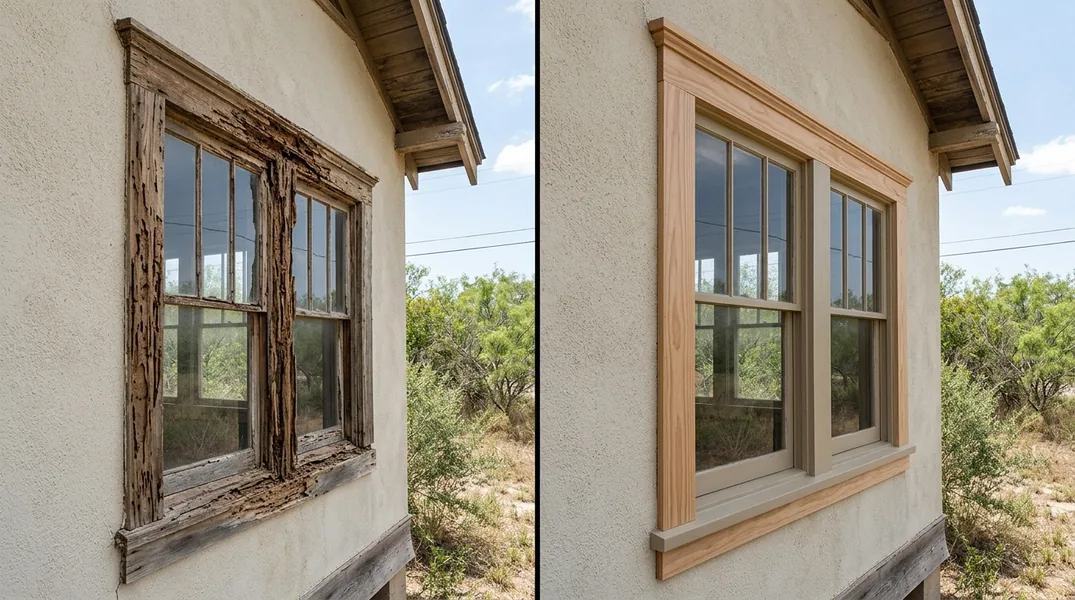
When Repair Makes Sense: Saving Money on Rotted Wood
One of the most common questions homeowners in Laredo ask is whether they can avoid the expense of replacing damaged wood altogether. The honest answer is sometimes yes, but it depends entirely on how deep the damage runs.
If you catch wood rot early, before it spreads beyond the surface layers, Wood Rot & Dry Rot Repair can often restore the structural integrity of the wood without full replacement. Surface rot that affects only the outer inch or two can be excavated, treated, and patched with epoxy or wood filler. This approach is significantly cheaper than tearing out and rebuilding entire sections of siding, framing, or trim. The key is catching the problem fast. Once rot penetrates deep into load-bearing beams or joists, repair becomes risky and replacement becomes the safer choice.
The climate in south Texas means moisture is always a concern. High humidity and occasional heavy rains create ideal conditions for fungal growth. Many homeowners discover rot only after it has already compromised structural strength. That's why annual inspections of vulnerable areas like roof edges, window frames, and foundation sills are so valuable.
Termite Damage Repair: Can You Save the Wood?
Termite Damage Repair presents a different challenge than wood rot. Termites don't just weaken wood from the outside; they tunnel through the interior, leaving the surface intact while hollowing out the core. This makes termite damage harder to detect and more dangerous to ignore. A beam that looks solid might be structurally unsound if termites have been feeding inside it for months or years.
Small-scale termite damage in non-structural wood, like decorative trim or fence posts, can sometimes be repaired by removing the affected section and replacing just that portion. However, if termites have reached structural elements like floor joists, wall studs, or load-bearing beams, replacement is almost always necessary. Repairing termite-damaged wood in critical areas is simply too risky. The wood has lost density and load-bearing capacity, and no epoxy patch can restore that strength reliably. Once termites have compromised a structural member, your home's safety depends on replacement.
If you suspect termite activity in Laredo or the surrounding areas, have a professional inspection done immediately. Termites work fast, and every month of delay increases the scope of damage and the final repair bill.
Sun-Split and Weather-Damaged Wood: Repair or Replace?
Sun-split wood is common in Texas, where intense heat and UV exposure cause wood to crack and check, especially on exposed beams, deck boards, and siding. The good news is that surface checking and splitting, while unsightly, often doesn't require full replacement if the wood is still structurally sound underneath.
For decorative or non-structural wood, filling sun-splits with flexible caulk or epoxy sealant can prevent water infiltration and improve appearance. This is a cost-effective repair that extends the life of the wood. However, if the split runs deep or if water has already begun to pool in the crack and cause rot, the damaged section should be replaced. A split that goes more than halfway through the thickness of a board compromises its strength, especially in load-bearing applications.
The challenge with sun-split wood is that damage and repair decisions often depend on the exact location and severity. A split in a decorative beam above a patio might be purely cosmetic, while the same split in a structural header above a window could be a safety issue. When in doubt, get a professional assessment. Laredo Carpentry can evaluate the damage and recommend whether repair or replacement is the right call for your specific situation.
Wood Rot & Dry Rot Repair Cost in Laredo: What to Budget
Understanding pricing for wood repair helps homeowners make informed decisions. Simple surface rot repair on exterior trim might cost $200 to $500, while replacing rotted siding on an entire wall section could run $1,500 to $3,500 or more, depending on the area and materials. Floor Joist & Subfloor Repair typically costs more because it requires accessing crawl spaces or removing flooring, and the work is more labor-intensive.
The cost difference between repair and replacement can be dramatic. Repairing a small area of rot costs far less than replacing an entire section of wood. However, if rot has spread extensively or if it affects structural elements, the repair cost might approach replacement cost anyway, making replacement the smarter investment. You're not just paying for materials; you're paying for the complexity of the work and the need to do it right the first time. Structural repairs require expertise and precision that justify professional labor costs.
Several factors affect the final bill: the extent of damage, the type of wood, accessibility, and whether the repair involves load-bearing members. Get a free estimate from Laredo Carpentry to understand the true cost of your specific repair. Call us at (956) 552-9710 for a consultation. We'll inspect the damage and give you an honest assessment of whether repair or replacement makes the most financial and structural sense.
Structural Wood Damage: When Replacement Is Non-Negotiable
Some wood damage leaves no room for compromise. If rot or termites have compromised load-bearing beams, joists, or wall studs, replacement is the only safe option. Beam Replacement & Load-Bearing Wall Removal work requires engineering and proper installation to ensure your home remains safe and up to code. Attempting to repair these critical elements with epoxy or filler is not just inadequate; it's dangerous.
Structural damage often goes unnoticed until it's severe. Sagging floors, cracks in drywall, or doors that no longer close properly are all signs that structural wood has failed. If you notice any of these warning signs, have the framing inspected by a professional immediately. Delaying structural repairs puts your family at risk and typically makes the problem worse and more expensive to fix.
The cost of structural replacement is higher than cosmetic repairs, but it's an investment in your home's safety and value. Skimping on structural repairs to save money now often results in much larger bills down the road, plus potential safety hazards and insurance complications.
How to Decide: A Practical Decision Framework for Homeowners
Here's a practical approach to deciding whether to repair or replace damaged wood. First, assess the location and severity. Is the damage in a structural or non-structural area? Does it affect load-bearing capacity? Second, consider the extent. Is it localized to a small section, or has it spread widely? Third, think about age and condition of the surrounding wood. If the damaged wood is part of an older section that's already showing signs of wear, replacement might make sense even if repair is technically possible.
Fourth, evaluate moisture and prevention. If the damage resulted from a moisture problem that's still present, repair alone won't solve the issue. You'll need to address the root cause, whether that's poor drainage, roof leaks, or ventilation problems. Without fixing the underlying moisture issue, rotted wood will simply rot again after repair.
Finally, get professional input. Homeowners in Laredo and nearby areas can reach out to Laredo Carpentry for a thorough evaluation. We'll examine the damage, explain your options, and provide honest guidance on the most cost-effective and safe solution. Call (956) 552-9710 or contact us for a free estimate today. There's no obligation, and we'll help you understand exactly what your wood damage means and what needs to happen next.
Looking for a professional carpentry contractor in Laredo? Laredo Carpentry responds fast for all your carpentry needs.
Get a Free QuoteOur services: Wood Rot & Dry Rot Repair · Termite Damage Repair · Floor Joist & Subfloor Repair