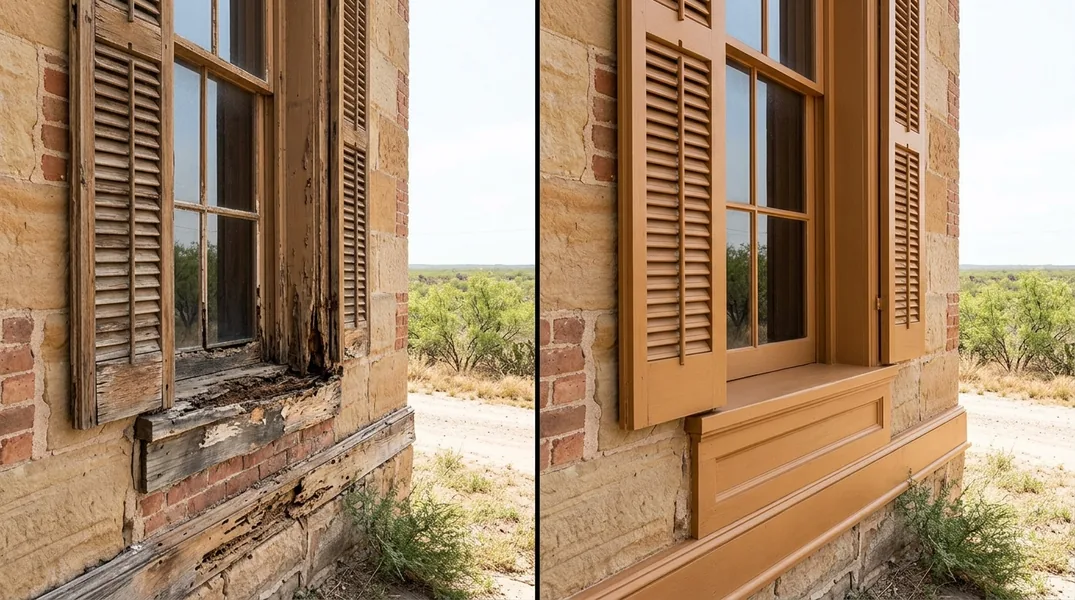
Understanding Dry Rot vs. Termite Damage
If you own a home in Laredo, you've probably heard warnings about wood rot and termite infestations. Both can cause serious structural damage, but they're fundamentally different problems requiring different solutions. Dry rot is a fungal decay that thrives in damp conditions, while termites are wood-eating insects that can devastate your home's frame. Understanding the difference between these two threats is the first step toward protecting your investment.
Homeowners often confuse dry rot with termite damage because both can weaken wooden structures and create visible damage patterns. However, the causes, progression, and repair methods are distinctly different. Dry rot spreads through fungal spores in moisture-rich environments, whereas termites actively consume wood as their food source. Misidentifying the problem could lead you down the wrong repair path, wasting time and money. That's why it's essential to know what you're looking at before calling in a professional for Wood Rot & Dry Rot Repair or Termite Damage Repair.
What Does Wood Rot Look Like: Visual Signs of Dry Rot
Dry rot has a distinctive appearance that sets it apart from other types of wood damage. The affected wood typically becomes soft, spongy, and darker in color, often taking on a brownish or grayish hue. Unlike healthy wood, rotted wood will easily crumble or break apart when you press on it with a screwdriver or similar tool. You might also notice a musty, earthy smell near the affected area, which is caused by the fungal decay breaking down the wood's cellular structure. The surface of dry rot often develops a papery or flaky texture, and in advanced cases, the wood may actually shrink and crack as it loses its structural integrity.
One of the most telling signs of dry rot is the presence of fungal growth or fruiting bodies. These can appear as white, gray, or reddish fuzzy growths on or near the wood. You might also see fine cracks running across the wood grain in a cube-like pattern, a phenomenon called cuboidal cracking. Dry rot typically starts in hidden areas like crawl spaces, basements, or under sinks where moisture accumulates. If you spot these signs in your Laredo home, especially near plumbing or areas with water exposure, it's time to investigate further and consider professional assessment.
Subterranean Termite Damage Signs: What to Look For
Termite damage presents a completely different visual profile than dry rot. While dry rot makes wood soft and spongy, termite damage typically leaves wood that appears hollow or layered, as termites eat along the grain and leave behind thin shells of wood. The exterior surface may look relatively intact, but if you tap on it, you'll hear a hollow sound. Subterranean termites, which are common in the South and Southwest, create visible mud tubes or shelter tubes on foundation walls and wooden posts. These tubes, typically about the diameter of a pencil, are constructed by termites to maintain moisture as they travel between their colony and food sources above ground.
Another key indicator of subterranean termite damage is the presence of discarded wings near windows, doors, or light fixtures, particularly during spring or early summer when termites swarm. You might also find small piles of what looks like sawdust or sand near wooden structures, which are actually termite droppings and wood particles. Unlike the musty smell associated with dry rot, termite-infested areas often have no distinctive odor at all, which makes them harder to detect without a careful visual inspection. If you notice any of these subterranean termite damage signs in your home, contacting a professional for Termite Damage Repair should be your next step.
Moisture and Environment: Why Each Problem Develops
Dry rot thrives in one specific condition: moisture. The fungus that causes dry rot needs consistently damp wood to grow and spread. In Laredo's climate, this can happen in poorly ventilated crawl spaces, around leaking pipes, under damaged roofing, or in bathrooms and kitchens with inadequate ventilation. Once moisture accumulates in wood and reaches a certain moisture content (typically above 20 percent), fungal spores can germinate and begin breaking down the wood's structure. The problem often starts small and hidden, then spreads progressively if the moisture source isn't eliminated.
Termites, on the other hand, are attracted to wood but need moisture to survive. Subterranean termites, the most common type, live in soil colonies and require a connection to the ground or a constant source of moisture. They don't actually need the wood to be damp in the way dry rot does, but they do need to maintain moisture levels in their tunnels and bodies. This is why they build those characteristic mud tubes. Termites are active year-round in warmer climates and can cause damage much more rapidly than dry rot because they're continuously feeding and reproducing. Understanding these environmental factors helps explain why prevention strategies differ so dramatically between the two problems.
Structural Impact and Repair Urgency
Both dry rot and termite damage can compromise your home's structural integrity, but they do so at different rates and in different ways. Dry rot weakens wood gradually as the fungus consumes the cellulose and lignin that give wood its strength. A beam or joist affected by dry rot may appear solid on the outside but be severely compromised internally. The damage spreads along the grain and can eventually render structural elements completely unsafe. If you notice signs of dry rot affecting floor joists, beams, or load-bearing walls, you should have a professional inspection done promptly to determine whether Floor Joist & Subfloor Repair or Beam Replacement & Load-Bearing Wall Removal is necessary.
Termite damage can occur much more rapidly and extensively than dry rot, especially if a colony has been feeding undetected for months or years. A single termite colony can contain hundreds of thousands of individuals, all working to consume wood. The damage they cause is often more widespread and affects larger areas of structural wood. In some cases, termite infestations can cause catastrophic structural failure if left untreated. The good news is that termite damage is generally more visible and detectable than dry rot because of the mud tubes and other signs. However, both problems demand urgent professional attention to prevent further deterioration and ensure your home remains safe.
How to Get Professional Help: Wood Rot & Dry Rot Repair Near Me
If you've identified signs of dry rot, termite damage, or you're simply unsure which problem you're facing, the best course of action is to contact a qualified professional. Attempting DIY repairs on structural wood damage is dangerous and often ineffective because you may miss hidden damage or fail to address the underlying cause. A trained carpenter or pest professional can accurately diagnose the problem, determine the extent of damage, and recommend the most appropriate repair strategy. In Laredo, Laredo Carpentry specializes in both wood rot and termite damage repair, offering comprehensive assessments and expert restoration work.
When you contact a professional, they'll conduct a thorough inspection of the affected areas and potentially hidden spaces where damage might be developing. They'll test wood moisture levels, look for fungal growth or termite activity, and evaluate the structural soundness of affected components. Based on their findings, they'll provide a detailed repair plan that addresses not just the visible damage but also the root cause, whether that's excess moisture or an active termite infestation. To schedule your inspection and get a free estimate, call Laredo Carpentry at (956) 552-9710 or visit our website. Don't wait until minor damage becomes a major structural problem.
Looking for a professional carpentry contractor in Laredo? Laredo Carpentry responds fast for all your carpentry needs.
Get a Free QuoteOur services: Wood Rot & Dry Rot Repair · Termite Damage Repair · Floor Joist & Subfloor Repair